Pipeline
From interested to won, and what it is worth.
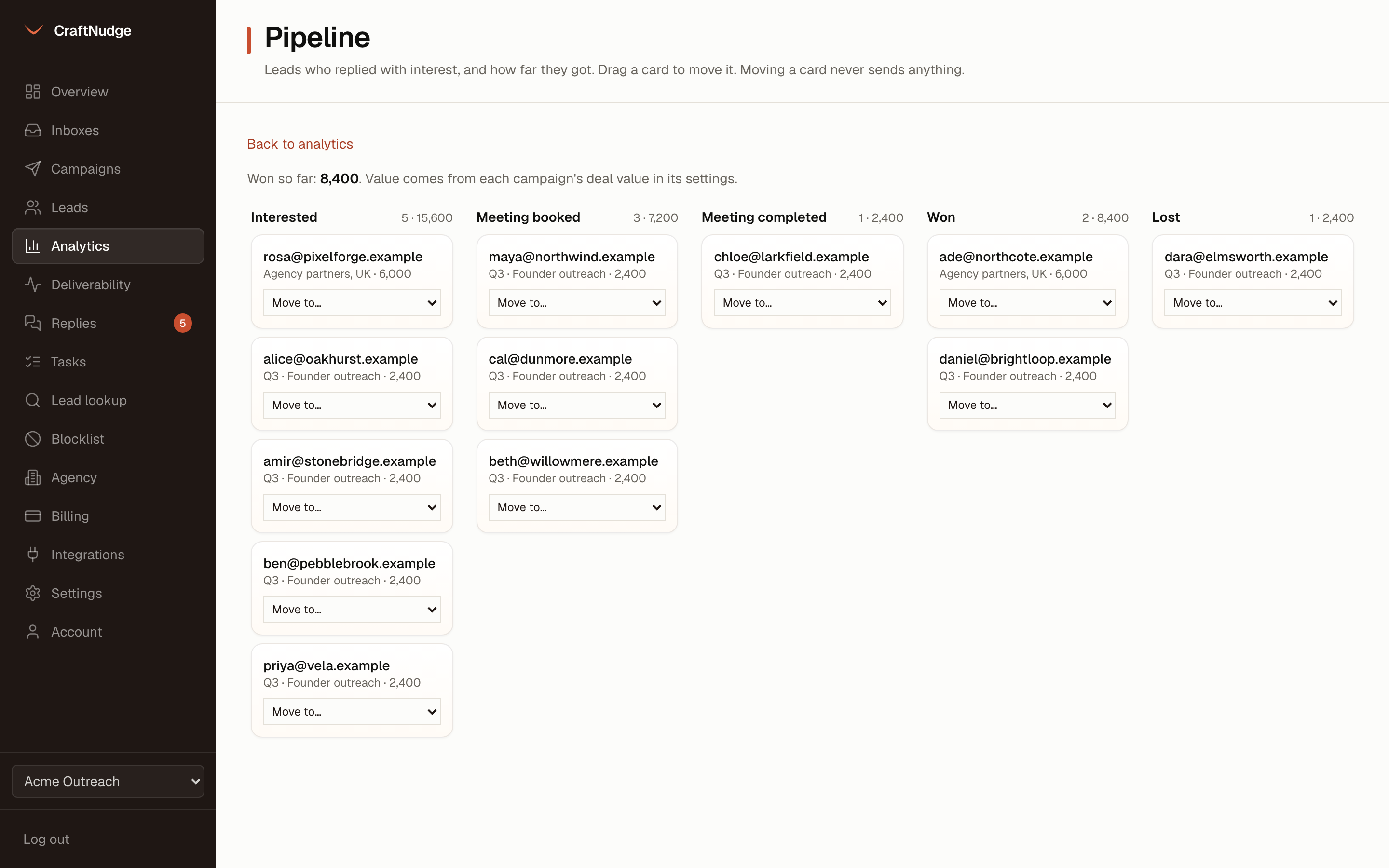
Every lead who replied with interest lands on one board. Move them on as the conversation goes, and each stage adds up the deal value of its campaigns. Moving a card never sends anything.
Where a card comes from
A lead lands on the board when you mark its reply in the unibox as interested, or as a later stage such as meeting booked or won. The pipeline moves cards on from there, but never back into Interested, because marking interest is what can start a follow-up step.
Five stages
Interested, meeting booked, meeting completed, won and lost, across every campaign in the workspace, each with how many leads it holds and what they are worth.
Deal value
Set once for each campaign, in its settings. Every card carries its campaign’s value, every stage adds its cards up, and the page says what has been won so far.
Moving a card sends nothing
A move sets the stage and stops any step still to come, since whoever moved the card is talking to that person now. It never schedules a step, starts a fork or sends an email.
Your other tools hear about it
A move fires the interest changed event to your webhook and to any REST hook subscribed to it, and adds a note on the contact in HubSpot or Pipedrive when one is connected.